Roll Over Mozart
Compose music with dice
In the eighteenth century, printed games let anyone compose music by throwing dice. Each throw pointed to a numbered bar in a table. A series of throws made a complete piece, in the right key, with a proper cadence at the end, and you needed to know nothing about notation to get there. Roll Over Mozart plays four of those games, following the original tables bar for bar.
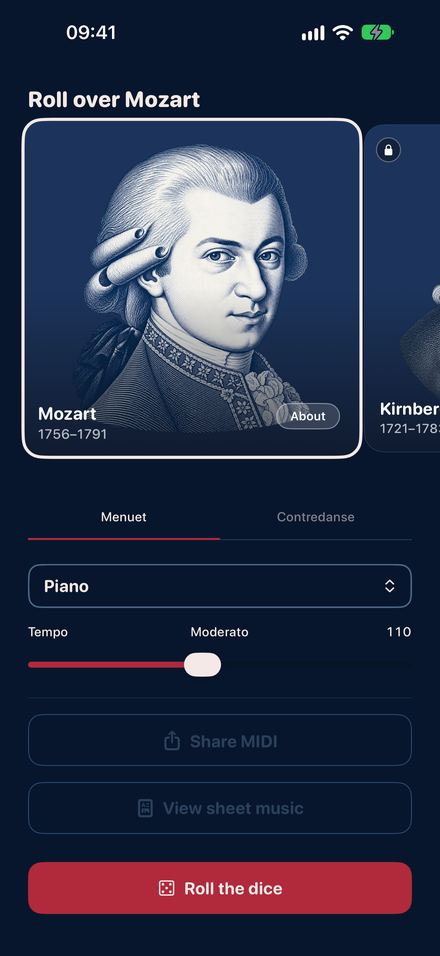 Roll the dice
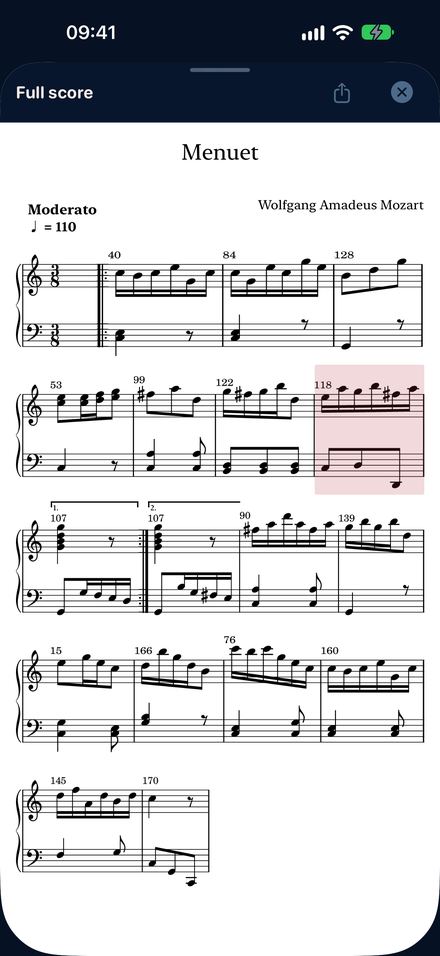 The score of your throw
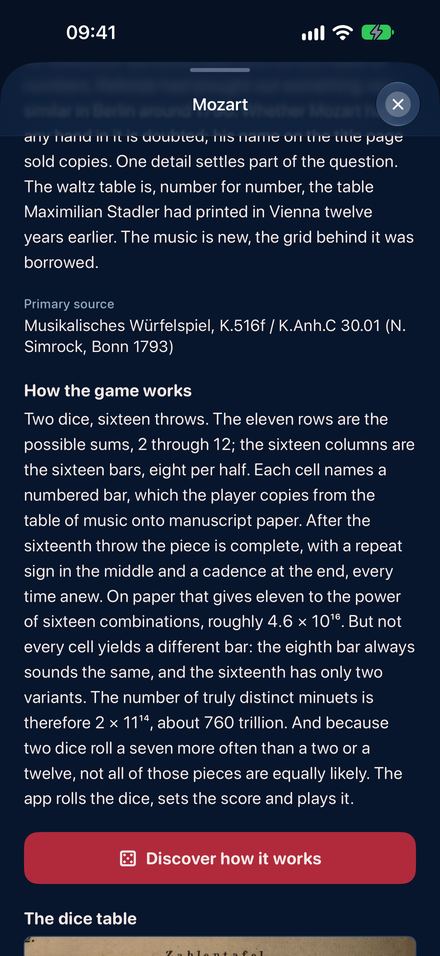 The original table
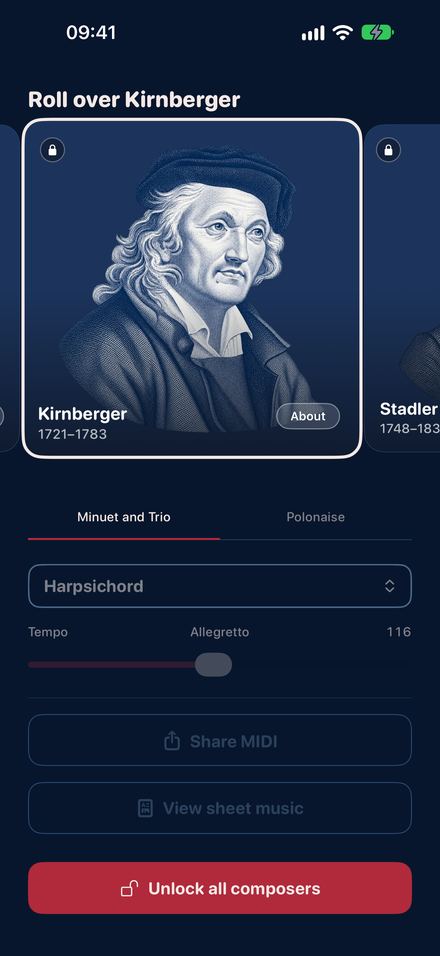 Three more in one purchase
Four printed games
- MozartThe Musikalisches Würfelspiel published under his name in Bonn in 1793: a minuet and an English contredanse, 176 numbered bars each, two dice, sixteen throws.
- KirnbergerBerlin 1757, the oldest of them all. A minuet and trio thrown with a single die, and a polonaise of 154 bars with two.
- StadlerVienna 1781. A minuet and trio by a Benedictine who knew both Mozart and Haydn, printed twelve years before the Mozart game borrowed its grid of numbers.
- C.P.E. BachSix bars of double counterpoint “without knowing the rules”. Any upper voice fits any lower one, and Bach tells the joke with a straight face.
What you can do
- Roll, and hear the result straight away.
- Change the instrument and the tempo while the piece is playing.
- Read the score of your own throw, bar by bar, as it sounds.
- Take it with you: sheet music as a PDF, or a MIDI file for any music program.
- Read the story of each print, with the original dice table and the pages of numbered bars.
Nothing here is generated
Every bar was written by the composer and printed in the eighteenth century, copied without a note changed. The dice decide only the order, exactly as they were meant to. This is the oldest generative music we know of, two hundred and fifty years before the first chatbot.
Also true
Eleven instruments, from piano and harpsichord to violin, flute and church organ. Tempo from a crawl to a sprint. Seven languages. No account, no advertising, no tracking, and it works in aeroplane mode. iPhone and iPad running iOS 26.2 or later.